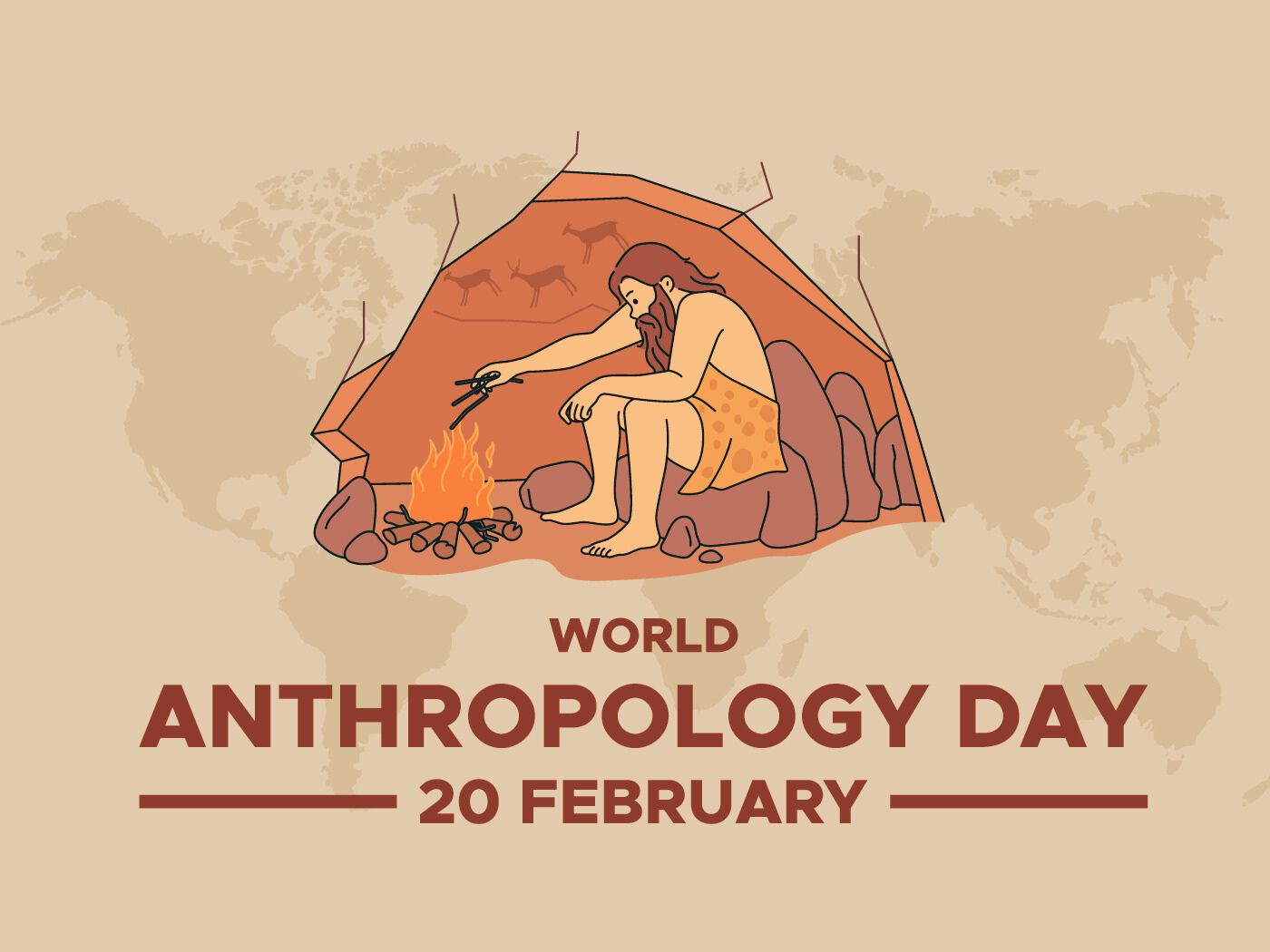
World Anthropology Day
World Anthropology Day, observed on the third Thursday of February every year, honors the study of humanity and its diversity.
According to the Gregorian calendar, this falls around mid-February every year.
This day recognizes the field that links the past to the present, and anthropology plays a major role in exploring the true meaning of being a human.
What is Anthropology?
Anthropology is the scientific study of humans, focusing on who we are, where we come from, and how we live. It examines human behavior, biology, cultures, societies, and languages in both the present and the past, including early and archaic humans. By combining ideas from biology and social sciences, anthropology helps us understand human evolution, cultural diversity, traditions, and the ways people interact and communicate across different societies.
Background of World Anthropology Day
The American Anthropological Association first introduced World Anthropology Day in 2015 with the simple idea of bringing anthropology beyond classrooms and into normal human environments.
This day brings together anthropologists to share their research and findings with the normal population and make it easy for everyone to access their findings.
Ever since its launch, museums, universities, research institutions, and anthropology departments across the globe have contributed to this day by organizing events like exhibitions, public lectures, student fairs, and workshops.
World Anthropology Day offers an opportunity for scholars, students, and the general public to engage in conversations about identity, culture, heritage, and several different challenges.
This day embodies how anthropology can solve real-world problems such as migration, inequality, climate change, public welfare, health, and cultural preservation.
The day highlights how anthropology helps address real-world issues, including migration, climate change, inequality, public health, and cultural preservation.
History of Anthropology
The roots of anthropology stretch back to ancient civilizations, way before it became a normal academic subject.
Early thinkers and civilizations, such as Herodotus, wrote about various traditions, cultures, social systems, and more, while their findings laid the foundation to understand how people think, live, and organize their societies.
During the European Enlightenment, scholars began studying human behavior and cultural differences in a more systematic way. New ideas about science, reason, and human diversity encouraged deeper research into societies around the world.
With the rapid growth of evolutionary theory in the 19th century, and especially Darwin’s work, a lot was influenced in this field.
During this period, universities and research societies began studying humans in a more scientific way.
By the early 20th century, Franz Boas helped turn anthropology into a professional field. He focused on fieldwork, culture, language, and human biology, shaping its four main branches.
Today, anthropology is a global discipline that studies human origins, cultures, languages, and societies.
How to honor World Anthropology Day
World Anthropology Day can be observed in a powerful way by learning about the four different branches of anthropology and how they contribute to society.
You can also attend events related to anthropology in your local area, as many places host talks and sessions on this day.
Read up on ancient civilizations, human evolution, or cultural traditions, or watch documentaries or relevant topics or discoveries.
Sharing interesting anthropology facts on social media using hashtags like #WorldAnthropologyDay can also help spread awareness.
World Anthropology Day reminds us that understanding humanity is essential in building a more inclusive, informed, and compassionate world.
Recommended Articles