The Hindu Calendar, also known as the Panchang and Panchangam, is a lunisolar calendar based on the movements of the moon.
The total number of days in the Hindu calendar is 354, 11 days shorter than the globally followed Gregorian calendar.
After every three years, the extra 33 days create an extra month called Adhik. Adhik consists of 29 days. The rest of the four days are adjusted throughout the year.
In 2023, the Adhik month was from July 18 to August 16. Thus, it will next appear in 2026.
Hindu Calendar 2026-27: Months and Dates in Gregorian Calendar
| Name of the Month | No. of Days | Gregorian Calendar |
|---|---|---|
| Chaitra | 30 days | Mar 16–Apr 14 |
| Vaisakha | 31 days | Apr 15–May 14 |
| Jyestha | 31 days | May 15–June 13 |
| Adhik Jyesths | 29 days | June 14–July 13 |
| Asadha | 30 days | Jul 14–Aug 12 |
| Shravana | 31 days | Aug 13–Sep 12 |
| Bhadrapada | 30 days | Sep 13–Oct 11 |
| Ashvina | 30 days | Oct 12–Nov 10 |
| Kartika | 30 days | Nov 11–Dec 10 |
| Agrahayana | 30 days | Dec 11–Jan 09, 2027 |
| Pausha | 30 days | Jan 10–Feb 08, 2027 |
| Magha | 30 days | Feb 09–Mar 10, 2027 |
| Phalguna | 30 days | Mar 11–Apr 09, 2027 |
Chaitra 2026 (March 16-April 14)
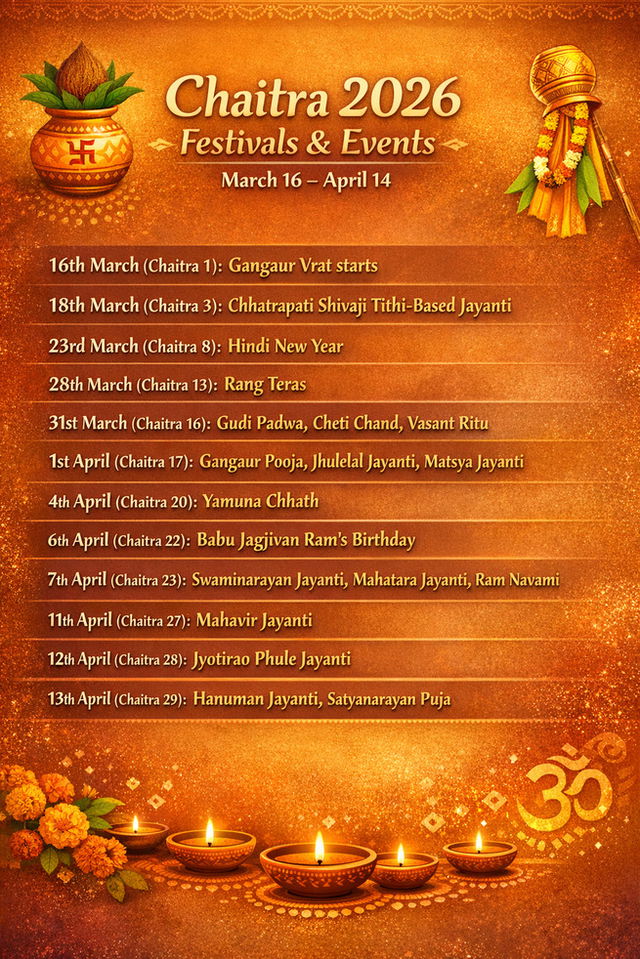
- 16th March (Chaitra 1): Gangaur Vrat starts
- 18th March (Chaitra 3): Chhatrapati Shivaji Tithi-Based Jayanti
- 23rd March (Chaitra 8): Hindi New Year
- 28th March (Chaitra 13): Rang Teras
- 31st March (Chaitra 16): Gudi Padwa, Cheti Chand, Vasant Ritu
- 1st April (Chaitra 17): Gangaur Pooja, Jhulelal Jayanti, Matsya Jayanti
- 4th April (Chaitra 20): Yamuna Chhath
- 6th April (Chaitra 22): Babu Jagjivan Ram’s Birthday
- 7th April (Chaitra 23): Swaminarayan Jayanti, Mahatara Jayanti, Ram Navami
- 11th April (Chaitra 27): Mahavir Jayanti
- 12th April (Chaitra 28): Jyotirao Phule Jayanti
- 13th April (Chaitra 29): Hanuman Jayanti, Satyanarayan Puja
Vaisakha 2026 (April 15-May 14)
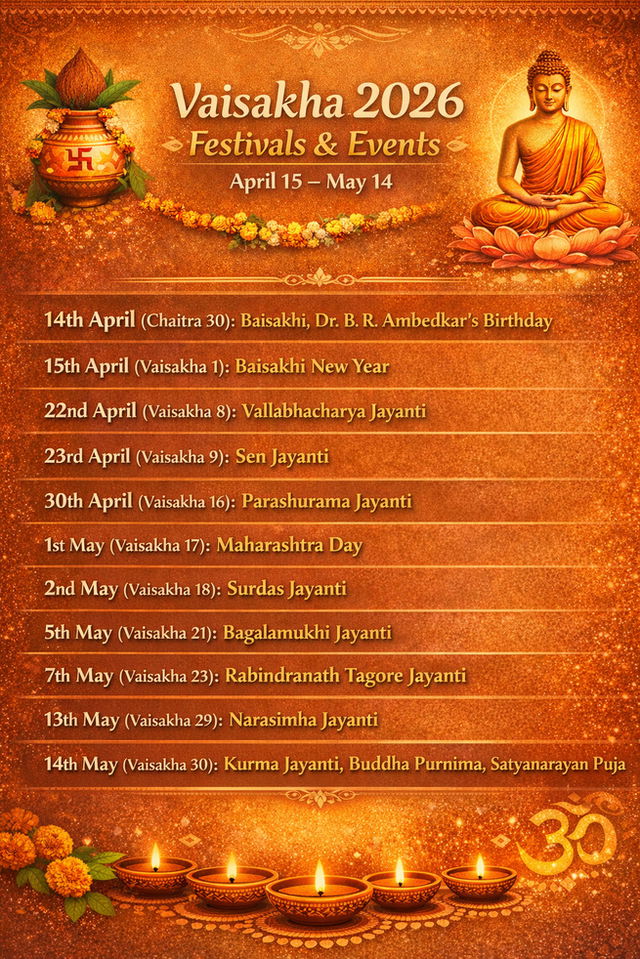
- 14th April (Chaitra 30): Baisakhi, Dr. B.R. Ambedkar's Birthday
- 15th April (Vaisakha 1): Bengali New Year
- 22nd April (Vaisakha 8): Vallabhacharya Jayanti
- 23rd April (Vaisakha 9): Sen Jayanti
- 30th April (Vaisakha 16): Parashurama Jayanti
- 1st May (Vaisakha 17): Maharashtra Day
- 2nd May (Vaisakha 18): Surdas Jayanti
- 5th May (Vaisakha 21): Bagalamukhi Jayanti
- 7th May (Vaisakha 23): Rabindranath Tagore Jayanti
- 13th May (Vaisakha 29): Narasimha Jayanti
- 14th May (Vaisakha 30): Kurma Jayanti, Buddha Purnima, Satyanarayan Puja
Jyestha 2026 (May 15-June 13)
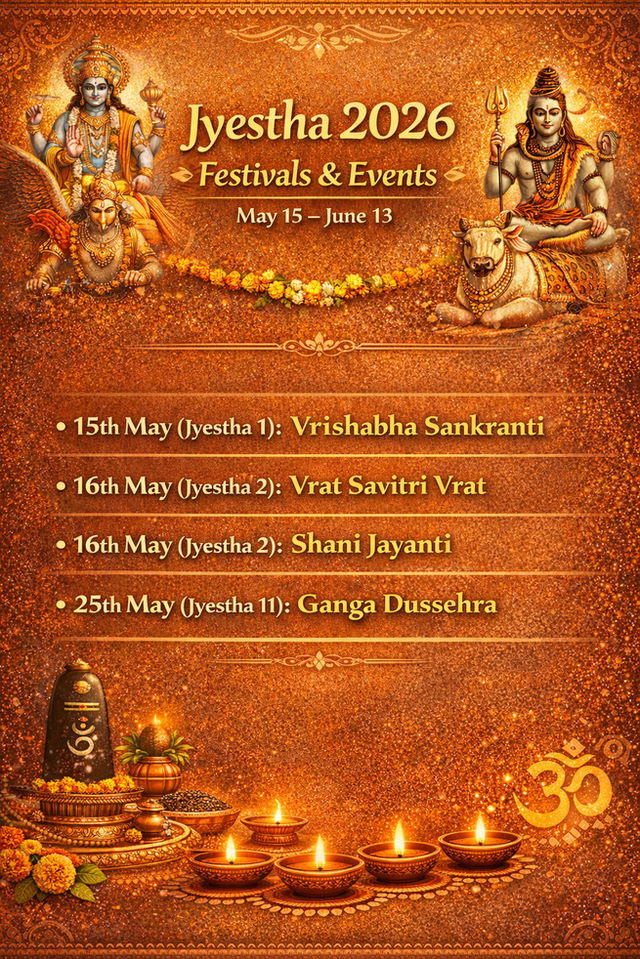
- 15th May (Jyestha 1): Vrishabha Sankranti
- 16th May (Jyestha 2): Vrat Savitri Vrat
- 16th May (Jyestha 2): Shani Jayanti
- 25th May (Jyestha 11): Ganga Dussehra
Adhik Jyestha 2026 (June 14-July 13)
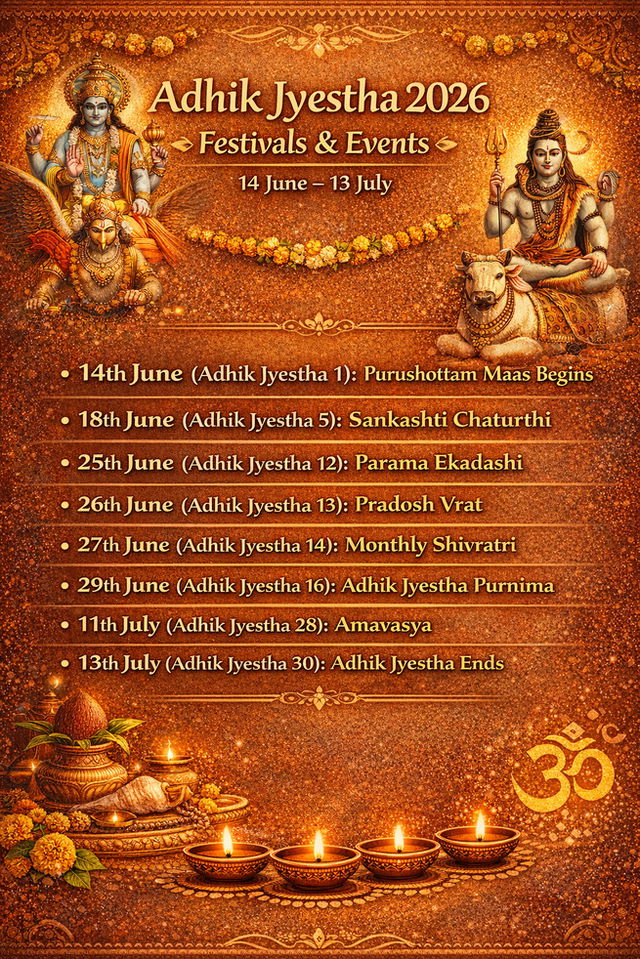
- 14th June (Adhik Jyestha 1): Adhik Maas begins (Purushottam Maas)
- 18th June (Adhik Jyestha 5): Sankashti Chaturthi
- 25th June (Adhik Jyestha 12): Parama Ekadashi
- 26th June (Adhik Jyestha 13): Pradosh Vrat
- 27th June (Adhik Jyestha 14): Monthly Shivratri
- 29th June (Adhik Jyestha 16): Adhik Jyestha Purnima
- 11th July (Adhik Jyestha 28): Amavasya
- 13th July (Adhik Jyestha 30): Adhik Jyestha ends.
Asadha 2026 (Jul 14–Aug 12)
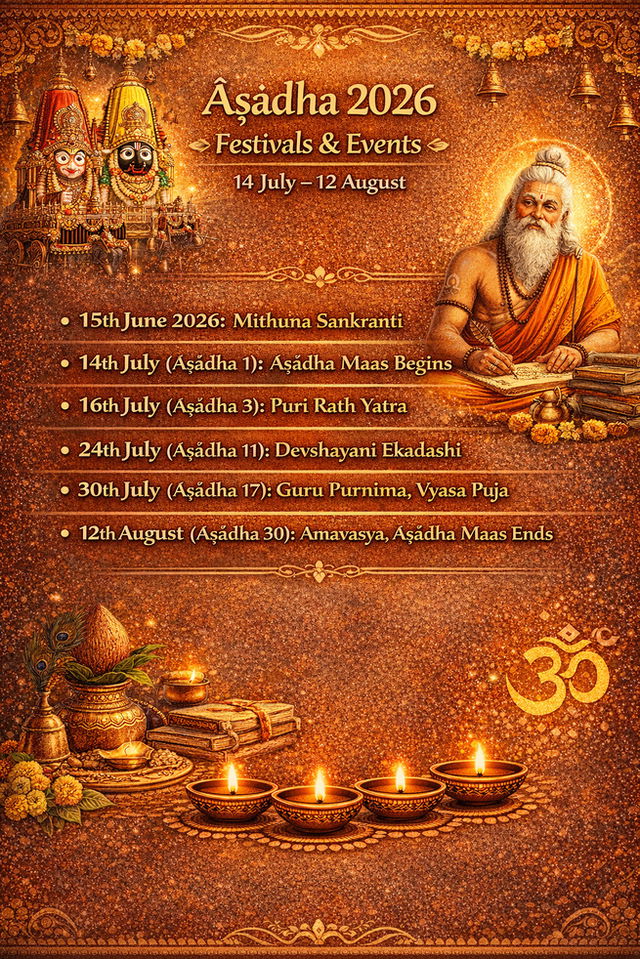
- 14th July (Asadha 1): Asadha Maas begins
- 16th July (Asadha 3): Puri Rath Yatra
- 24th July (Asadha 11): Devshayani Ekadashi
- 30th July (Asadha 17): Guru Purnima, Vyasa Puja
- 12th August (Asadha 30): Amavasya, Asadha Maas ends
Shravana (Aug 13–Sep 12)
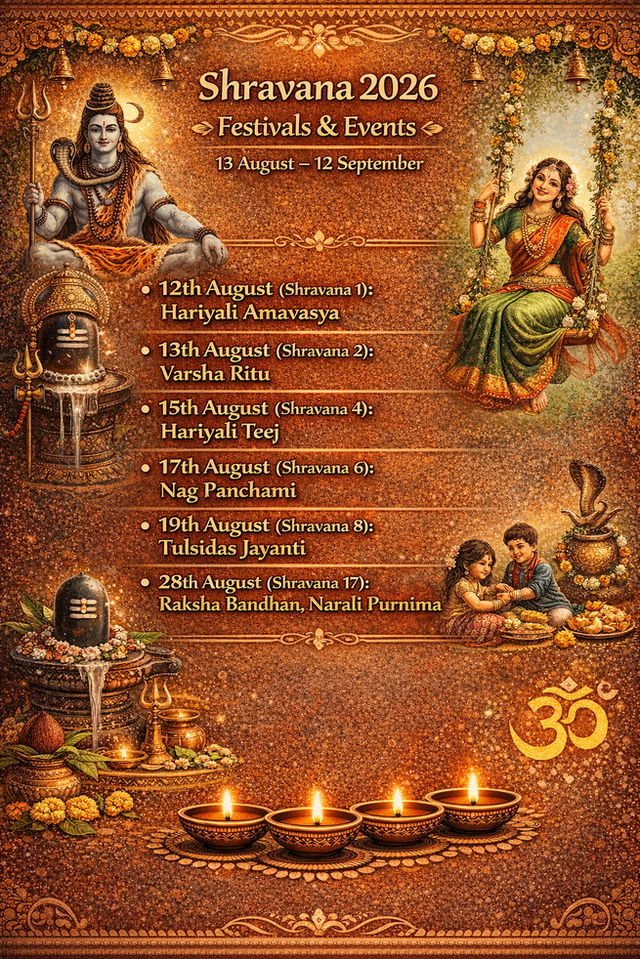
- 12th August (Shravana 1): Hariyali Amavasya
- 13th August (Shravana 2): Varsha Ritu
- 15th August (Shravana 4): Hariyali Teej
- 17th August (Shravana 6): Nag Panchami
- 19th August (Shravana 8): Tulsidas Jayanti
- 28th August (Shravana 17): Raksha Bandhan, Narali Purnima
Bhadrapada 2026 (Sep 13–Oct 11)
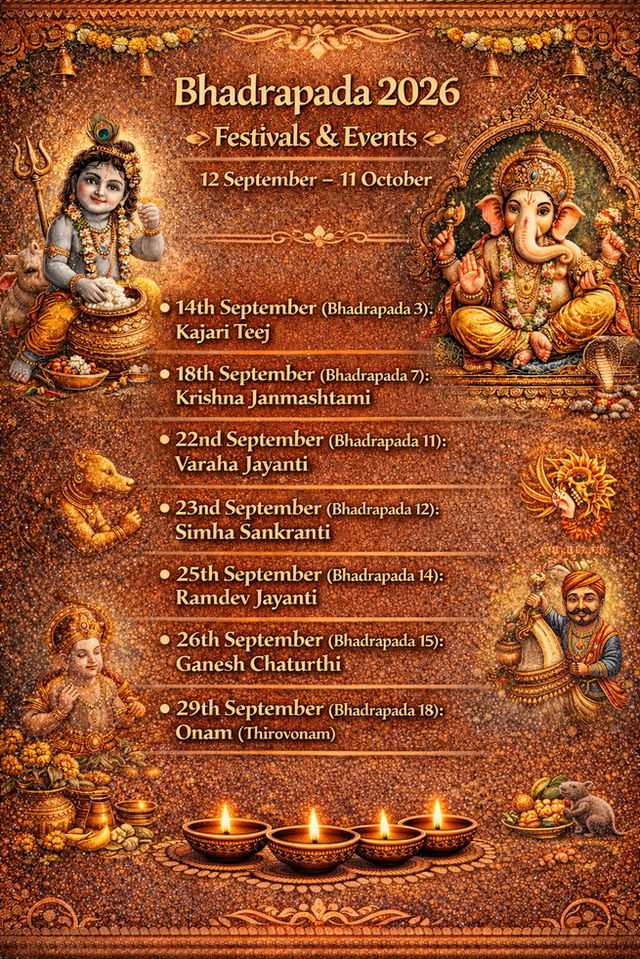
- 14th September (Bhadrapada 3): Kajari Teej
- 18th September (Bhadrapada 7): Krishna Janmasthami
- 22nd September (Bhadrapada 11): Varaha Jayanti
- 23rd September (Bhadrapada 12): Simha Sankranti (solar, overlaps month)
- 25th September (Bhadrapada 14): Ramdev Jayanti (regional)
- 26th September (Bhadrapada 15): Ganesh Chaturthi
- 29th September (Bhadrapada 18): Onam (Thiruvonam)
Ashvina 2026 (Oct 12–Nov 10)
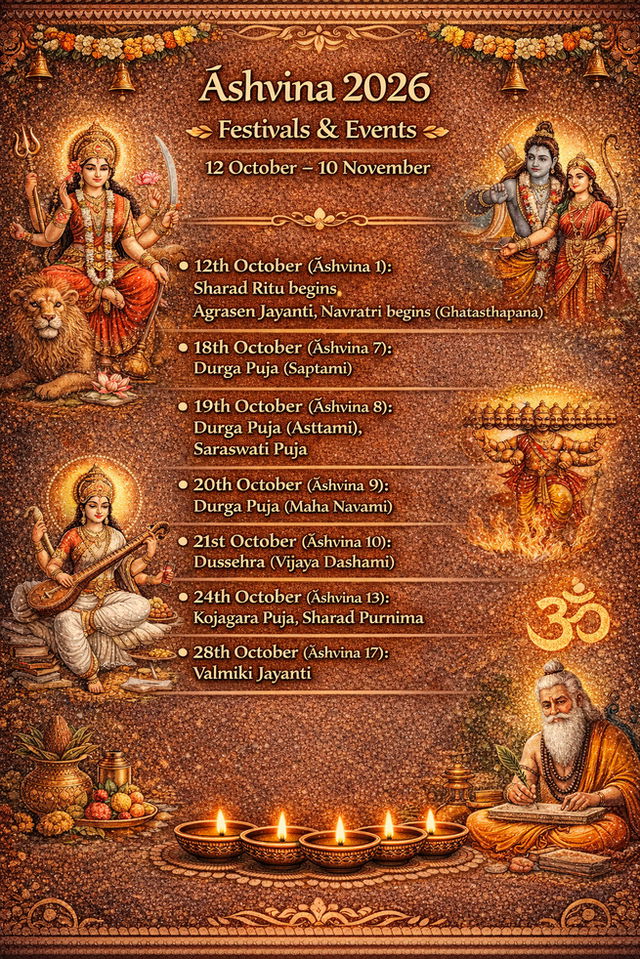
- 12th October (Āshvina 1): Sharad Ritu begins, Agrasen Jayanti, Navratri begins (Ghatasthapana)
- 18th October (Āshvina 7): Durga Puja (Saptami)
- 19th October (Āshvina 8): Durga Puja (Ashtami), Saraswati Puja
- 20th October (Āshvina 9): Durga Puja (Maha Navami)
- 21st October (Āshvina 10): Dussehra (Vijaya Dashami)
- 24th October (Āshvina 13): Kojagara Puja, Sharad Purnima
- 28th October (Āshvina 17):Valmiki Jayanti
Kartika 2026 (Nov 11–Dec 10)
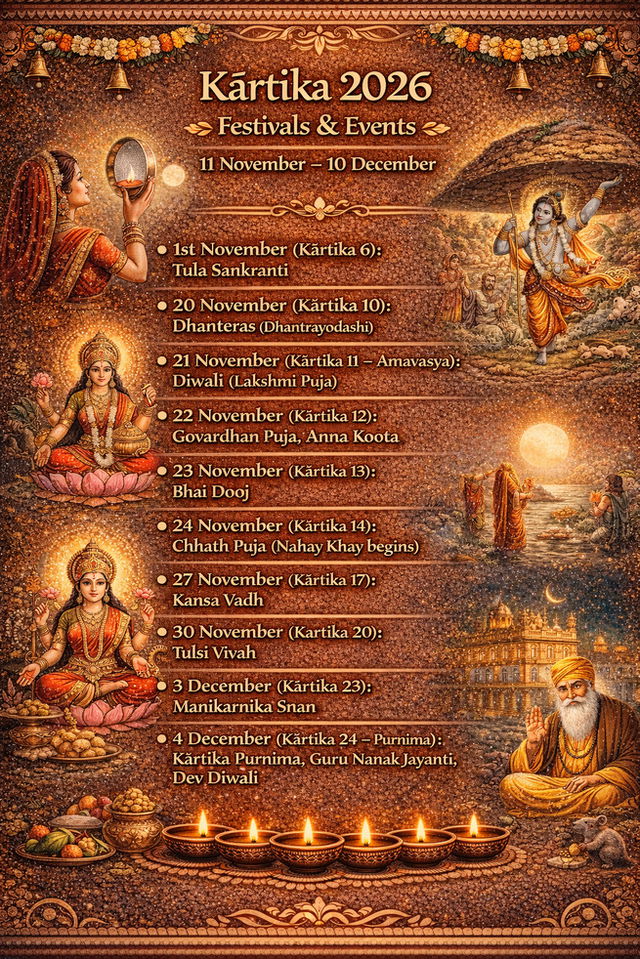
- 16th November (Kārtika 6): Tula Sankranti
- 20th November (Kārtika 10): Dhanteras(Dhantrayodashi)
- 21st November (Kārtika 11 – Amavasya): Diwali(Lakshmi Puja)
- 22nd November (Kārtika 12): Govardhan Puja, Anna Koota
- 23rd November (Kārtika 13): Bhai Dooj
- 24th November (Kārtika 14): Chhath Puja (Nahay Khay begins)
- 31st October: Sardar Vallabhbhai Patel’s Birthday (fixed date; outside Kārtika)
- 27th November (Kārtika 17): Kansa Vadh
- 30th November (Kārtika 20): Tulsi Vivah
- 3rd December (Kārtika 23): Manikarnika Snan
- 4th December (Kārtika 24 – Purnima): Kartika Purnima, Guru Nanak Jayanti, Dev Diwali
Agrahayana 2026-27 (Dec 11–Jan 09, 2027)
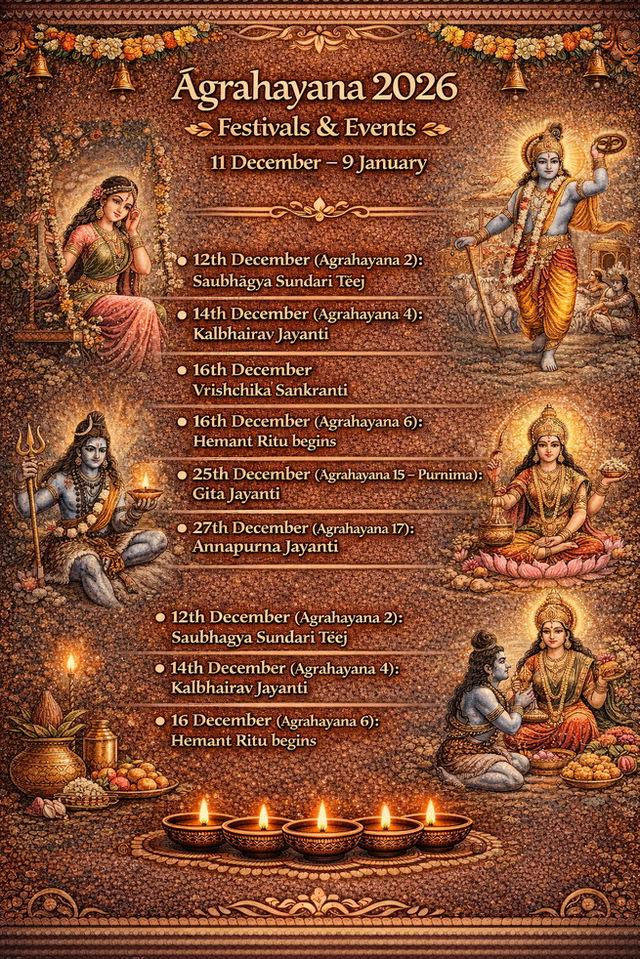
- 12th December (Agrahayana 2): Saubhagya Sundari Teej
- 14th December (Agrahayana 4): Kalbhairav Jayanti
- 16th December (Agrahayana 6): Hemant Ritu begins.
- 25th December (Agrahayana 15 – Purnima): Gita Jayanti
- 27th December (Agrahayana 17): Annapurna Jayanti
Pausha 2027(Jan 10–Feb 08, 2027)
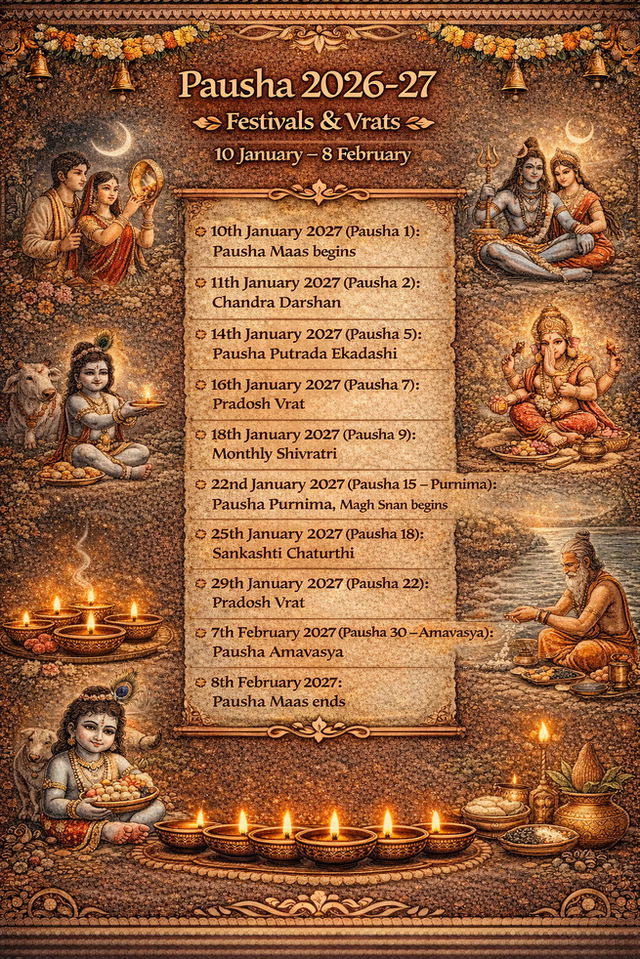
- 11th January (Pausha 2): Chandra Darshan
- 14th January (Pausha 5): Pausha Putrada Ekadashi (observed for progeny and family well-being)
- 16th January (Pausha 7): Pradosh Vrat
- 18th January (Pausha 9): Monthly Shivratri
- 22nd January (Pausha 15 – Purnima):Pausha Purnima, Magh Snan begins
- 25th January (Pausha 18): Sankashti Chaturthi
- 29th January (Pausha 22): Pradosh Vrat
- 7th February (Pausha 30 – Amavasya): Pausha Amavasya
Magha 2027 (Feb 09–Mar 10, 2027)
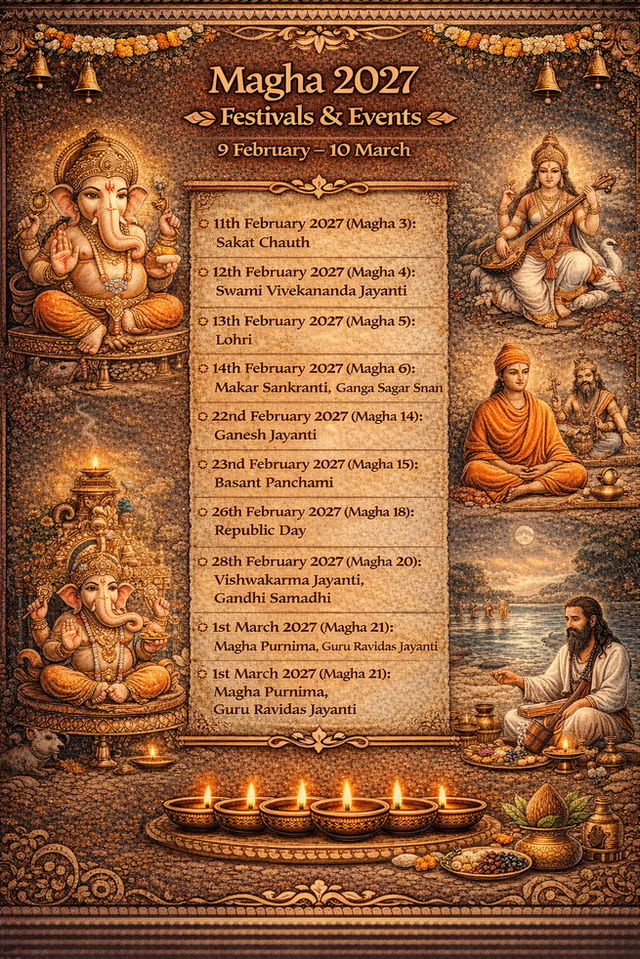
- 11th February (Magha 3): Sakat Chauth
- 12th February (Magha 4): Swami Vivekananda Jayanti (National Youth Day – fixed date, aligns within Magha this year)
- 13th February (Magha 5): Lohri (Fixed-date festival; falls within Magha in 2027)
- 14th February (Magha 6): Makar Sankranti, Ganga Sagar Snan
- 22nd February (Magha 14): Ganesh Jayanti
- 23rd February (Magha 15): Basant Panchami
- 28th February (Magha 20): Vishwakarma Jayanti, Gandhi Samadhi
- 1st March (Magha 21):Magha Purnima, Guru Ravidas Jayanti
Phalguna 2027 (Mar 11–Apr 09, 2027)

- 19th March (Phālguna 9): Sri Ramdas Navami
- 22nd March (Phālguna 12): Kumbha Sankranti
- 24th March (Phālguna 14): Maha Shivratri
- 28th March (Phālguna 18): Phulera Dooj, Shivaji Jayanti, Ramakrishna Jayanti
- 2nd April (Phālguna 23): Holashtak begins
- 9th April (Phālguna 30 – Purnima): Chaitanya Mahaprabhu Jayanti, Holika Dahan, Holashtak ends
History of the Hindu Calendar
The Hindu calendar is an ancient calendar that first surfaced in Vedic scriptures most likely between 2000 BCE and 1000 BCE. Initially lunar-centric, it was based on the moon's phases. However, to harmonize with solar events, adjustments were made, leading to regional variations in calendrical systems.
Intellectuals such as Aryabhata and Varahamihira made significant contributions by applying mathematical principles and astronomical observations. They refined the calendar, introducing concepts like tithis (lunar days) and masas (lunar months), aiding its accuracy and usability.
Among the multitude of regional calendars, the Vikram Samvat stands out. Linked to the legendary King Vikramaditya, it commences from his ascension to the throne, blending lunar months with solar corrections.
Today, the Hindu calendar remains integral to cultural and religious practices, guiding festivals, rituals, and auspicious occasions. It serves as a bridge between tradition, spirituality, and the cosmic rhythms, enriching lives with its cyclical insights.
You might find these articles interesting: