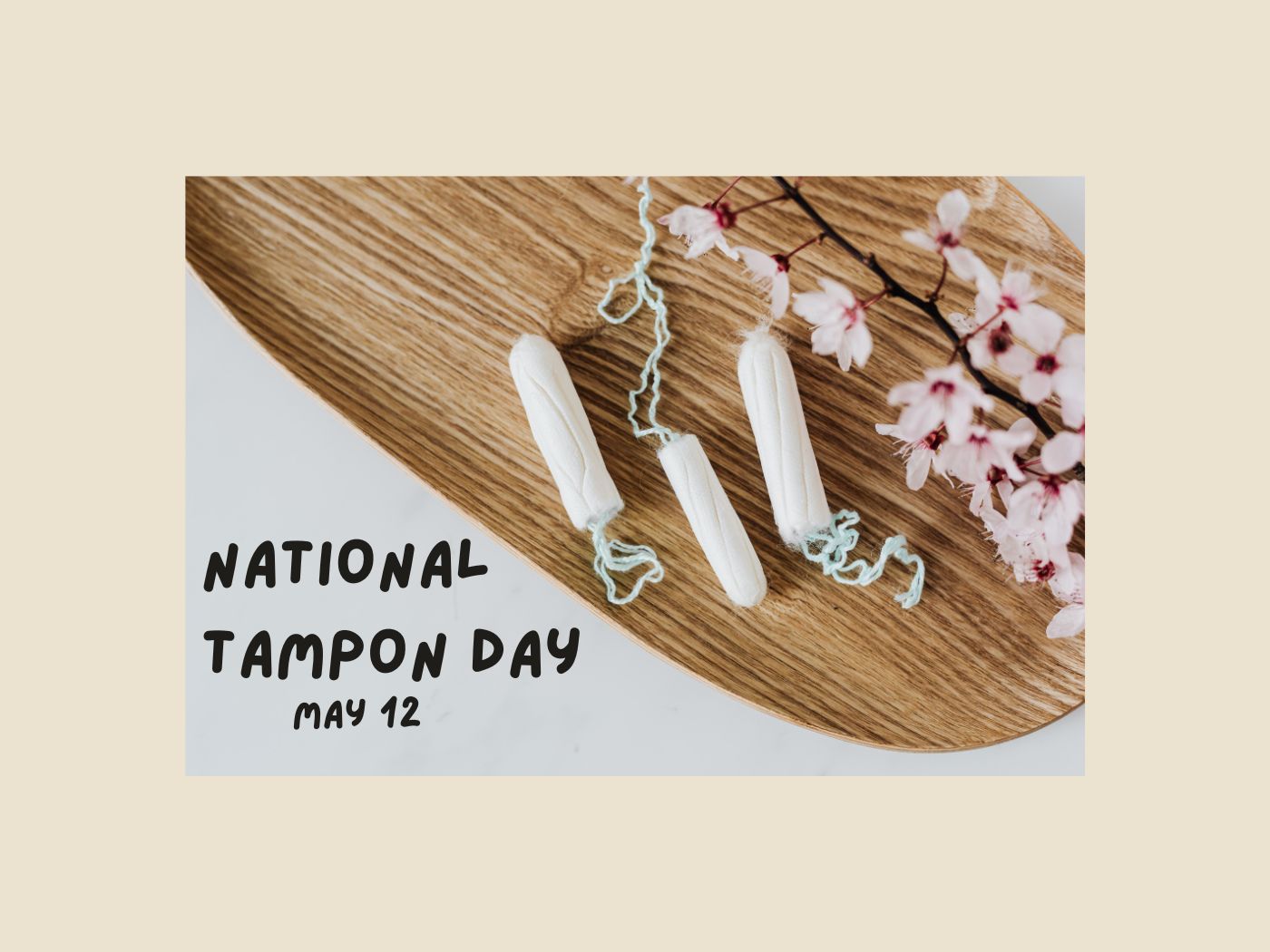
National Tampon Day

On May 12 every year, National Tampon Day is observed to promote awareness, educate the public about menstrual hygiene, and normalize talking about women’s health by breaking the stigma.
National Tampon Day calls for open conversations about periods and other important issues related to women’s reproductive health.
This day also talks about issues such as period poverty, advocating for accessible, affordable, and safe menstrual products in workplaces, communities, public toilets, schools, etc., making it a priority for everyone.
History of Tampons
Records have shown that women have been using tampons for thousands of years across various cultures, where early evidence goes as early as the 15th century, proving the utilization of soft papyrus tampons in ancient Egypt, while Roman women are believed to have used woolen tampons.
Japanese women used tampons made from paper that was held with a bandage and changed them often. Traditionally, women native to Hawaii used the furry part of a local fern known as "hapu'u," while women in parts of Africa and Asia relied on mosses, grasses, and other plants.
R.G. Mayne first coined the term “tampon” as a more sophisticated word for "plug" used to control bleeding.
The first modern tampon that we know of with a tube applicator was Tampax, and Earle Haas patented it. That patent was bought by Gertrude Schulte Tenderich in 1933, who started manufacturing the product.
They hired women and nurses for its production and educating the people about its advantages. Studies confirmed the safety of tampons by 1945, and another study in 1965 proved that they had no unwanted physiological effects.
German gynecologist Judith Esser-Mittag in the late 1940s developed a digital-style tampon that did not require an applicator to be inserted.
Carl Hahn and Heinz Mittag later worked on mass production, and Hahn sold his company to Johnson & Johnson in 1974.
Safety concerns rose in 1992 when a harmful chemical, dioxin, was discovered in tampons due to chlorine bleaching by the U.S. Congress.
Later, manufacturers switched to chlorine-free bleaching methods, and efforts to improve safety and transparency were made with the Tampon Safety and Research Act in 1997, which would require research and reporting on chemicals and additives in feminine hygiene products.
There have been multiple reintroductions of the bill, the latest being in 2019 as the Robin Danielson Feminine Hygiene Product Safety Act.
Risks of Tampons
- Toxic Shock Syndrome (TSS) is a rare but serious bacterial infection that can occur from leaving a tampon in too long.
- Tampons can cause vaginal irritation, including itching, dryness, or discomfort, especially if made from synthetic materials.
- Some women may experience allergic reactions to fragrances, dyes, or chemicals in tampons.
- Leaving tampons in for extended periods increases the risk of yeast or bacterial infections.
- Occasionally, tampons can get stuck in the vagina, requiring medical assistance for removal.
- Using a tampon with higher absorbency than needed can disrupt the natural vaginal balance.
- Frequent use of disposable tampons contributes to environmental waste since most are non-biodegradable.
Recommended Next